If there’s one haircare step I’d call non-negotiable, it’s heat protection.
It’s the equivalent of sunscreen for your hair. Not the most exciting product, rarely the one people rave about, but the one that quietly prevents damage that no treatment can fully undo later.
Why heat damages hair
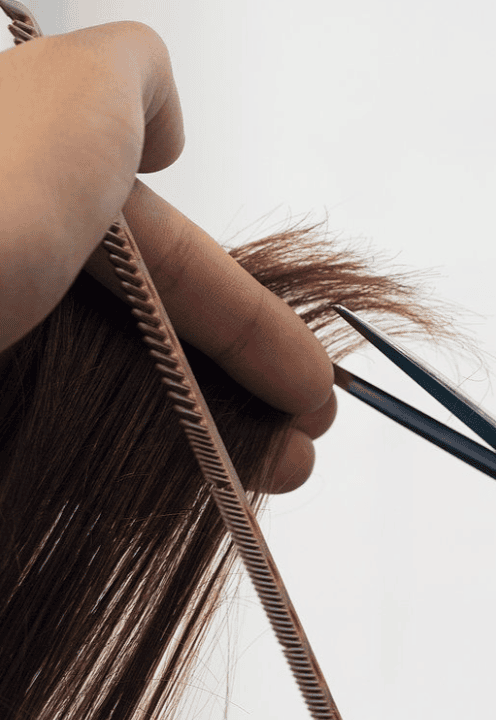
Remember that the lengths of your hair can’t repair themselves. Whatever damage they take, they carry until they’re cut off.
Heat is one of the biggest causes of that damage. High temperatures weaken the proteins that give hair its strength, lift and roughen the outer layer of the strand, and draw out moisture. Over time, that shows up as dryness, frizz, dullness, split ends and breakage. On colour-treated hair, heat also speeds up fading.
The damage builds gradually, one blow-dry and one pass of the straighteners at a time, which is why it’s so easy to underestimate.
How heat protectants work
A heat protectant forms a light film over the surface of your hair. That film helps slow down how quickly heat reaches the strand, spreads the heat more evenly so there are fewer hot spots, and helps reduce moisture loss.
It’s worth being realistic about what that means. A heat protectant reduces damage. It doesn’t make hair immune to heat. The temperature you use, and how often, still matter enormously.
Temperature matters most
The single most effective way to protect your hair is to use the lowest temperature that works for it.
As a rough guide for straighteners and curling tools:
Fine, damaged or bleached hair: around 150–180°C.
Medium or healthy hair: around 180–200°C.
Thick, coarse or very curly hair: up to around 200–210°C.
Many tools default to their highest setting, which is often far more heat than your hair needs. If your hair sizzles, smells or steams when you style it, the heat is too high or your hair isn’t fully dry.
The different types
Sprays are light and easy to apply evenly. They suit fine and medium hair, and most can be used on damp or dry hair.
Creams and lotions are richer, and add smoothing and moisture. They suit thick, curly or frizz-prone hair, and are ideal before blow-drying.
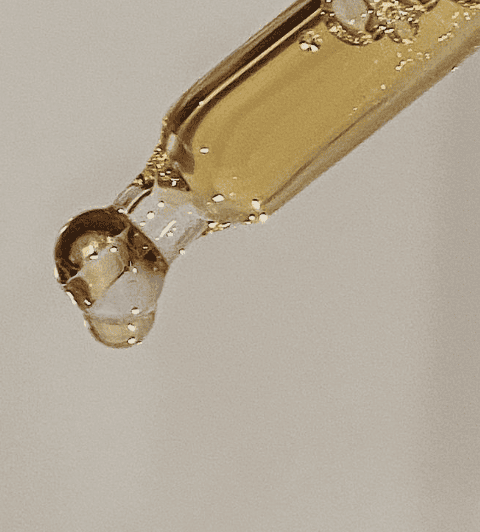
Serums and oils can smooth and add shine as well as protect, but only if they’re formulated as heat protectants. Most natural oils aren’t, so check the label.
Multi-tasking primers combine heat protection with detangling, smoothing or volume, so you can use one product instead of several.
How to use it properly
Apply it before every use of heat, including your hairdryer. Many people only use heat protection before straighteners, but blow-drying counts too.
Apply to damp hair before blow-drying. Towel-dry first, then apply evenly from the roots to the ends, wherever the heat will reach.
Apply to dry hair before straighteners or curling tools, using a formula designed for dry hair.
Work in sections, so every strand is covered, not just the top layer.
Let it dry fully before using hot tools. Never use straighteners on damp hair. The trapped water turns to steam inside the hair, which causes serious damage.
Reapply before restyling. If you’re touching up your hair on day two, your protection from the day before won’t still be working.
Habits that help
Let your hair air-dry partly before blow-drying, so it spends less time under heat.
Keep the hairdryer moving, and use the nozzle to direct the airflow.
Pass over each section once or twice, rather than repeatedly.
Give your hair heat-free days when you can.
The short version:
Use heat protection every time you use heat, including your hairdryer, and use the lowest temperature that works.
Ask yourself:
What temperature are my straighteners set to? Do I use heat protection before blow-drying, or only before straightening?
Worth knowing:
Never use straighteners on damp hair. Trapped water turns to steam inside the strand, causing damage that can’t be undone.