Exfoliation is one of the most satisfying steps in skincare, and one of the easiest to get wrong.
Used well, it can make skin look brighter, feel smoother, and help everything you apply afterwards work better. Overdone, or matched to the wrong skin, it’s one of the most common reasons skin becomes sensitised. The difference usually comes down to understanding the two main types, and choosing the right one for your skin.
What exfoliation actually does
Your skin is constantly renewing itself. New cells form in the deeper layers and gradually move to the surface, where older cells are naturally shed.
That shedding doesn’t always happen evenly. It can slow with age, with dehydration, or simply because of your skin type. When dead cells build up on the surface, skin can look dull, feel rough, and pores are more likely to become congested.
Exfoliation helps that process along. It removes the build-up, either by physically lifting it away or by loosening the bonds that hold those cells together.
Physical exfoliation
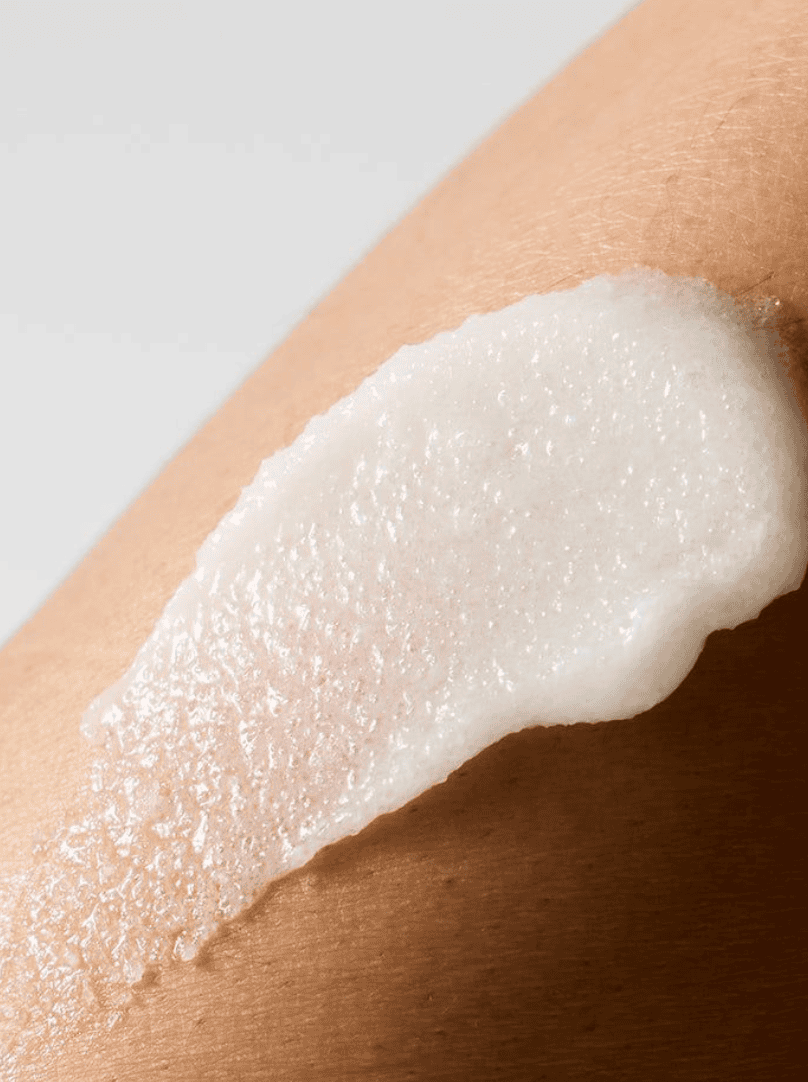
Physical exfoliants work by hand: scrubs, cleansing brushes, textured cloths. You’re manually buffing away the surface layer.
They’re popular because they feel immediately effective. Your skin feels smoother straight away, and there’s something very satisfying about that.
The limitation is that they work only on the very surface, and the results depend a lot on how they’re used. Coarse or uneven particles and too much pressure can leave skin irritated, which is why physical exfoliation is often too much for dry or sensitive skin. If you enjoy it, look for fine, smooth formulas, and let the product do the work rather than your hands.
Chemical exfoliation
Chemical exfoliants use acids or enzymes to dissolve the bonds between dead skin cells, so they shed more easily.
The word chemical can make these sound harsher, but they’re often the gentler option. Because they work evenly across the skin rather than relying on friction, they can be far more targeted, as long as you choose the right one.
There are four main types:
AHAs (alpha hydroxy acids) are water-soluble and work on the surface of the skin. They’re best for texture, dullness and uneven tone. Glycolic acid has the smallest molecule, so it penetrates most readily and tends to be the most potent. Lactic acid has a larger molecule, so it’s gentler, and it also helps skin hold on to moisture.
BHAs (beta hydroxy acids) are oil-soluble, which means they can work inside the pore as well as on the surface. Salicylic acid is the most common, and it’s the go-to for congestion, blackheads and breakouts.
PHAs (polyhydroxy acids) have even larger molecules, so they work slowly and gently at the surface. They’re a good option for sensitive skin, or for anyone new to exfoliating acids.
Enzymes, usually derived from fruits like papaya and pineapple, gently break down the proteins that hold dead skin cells together. They’re among the gentlest options.
Many exfoliating products combine more than one of these, which is why reading the ingredient list matters more than the name on the front.
Choosing yours
Very simply:
Sensitive skin: enzymes or PHAs.
Breakouts and clogged pores: salicylic acid.
Texture and signs of ageing: glycolic acid.
Dry or dehydrated skin: lactic acid.
Format matters too. Exfoliants come as cleansers, toners, serums and masks. A cleanser is rinsed off within a minute, so an exfoliating cleanser tends to be the gentlest way to start. Leave-on toners and serums are more effective, and need more care.
How often, and how much
More exfoliation doesn’t mean better skin. For most people, once or twice a week is a good place to start. Build up gradually only if your skin is comfortable.
It’s worth knowing the signs that you’re overdoing it: tightness, stinging when you apply products that normally feel fine, redness, flaking, or a tight, overly shiny look. Some people also notice more breakouts. If that happens, stop exfoliating completely, keep your routine simple and nourishing, and give your skin time to recover before starting again, less often.
Where it fits in your routine
Exfoliants are usually an evening step. Apply leave-on exfoliants after cleansing and before your serums and moisturiser.
Be careful when combining them with other strong ingredients, particularly vitamin A. Using both on the same night can easily leave skin sensitised, so alternate them on different nights instead.
And because exfoliating acids can make skin more sensitive to the sun, sunscreen every morning is essential. Without it, you’re undoing the good work.
The short version:
Physical exfoliants buff the surface. Chemical exfoliants dissolve build-up more evenly, and are often gentler.
Ask yourself:
What am I exfoliating for: texture, congestion, dullness? And how often am I actually doing it?
Worth knowing:
Salicylic acid is oil-soluble, which is why it works inside the pore. That’s what makes it so effective for breakouts.