Leave-in conditioner is one of the most useful products in haircare, and one of the most overlooked. It rarely gets the attention of masks or oils, and yet for many hair types, it’s the step that makes the biggest everyday difference.
It’s also exactly what it sounds like: a conditioner you don’t rinse out.
How it’s different from your regular conditioner
Your rinse-out conditioner does its work in the shower. It smooths, softens and detangles, then gets rinsed away, leaving a light layer behind.
A leave-in conditioner is designed to stay on your hair. It’s much lighter, so it won’t weigh hair down or look greasy, and it keeps working as your hair dries and through the day.
For most people, it doesn’t replace your regular conditioner. It adds to it. Your rinse-out conditioner does the main conditioning, and your leave-in adds extra softness, moisture and protection afterwards.
What it does
Detangles, making hair easier to comb through when it’s at its most fragile.
Adds lightweight moisture, particularly to the dry mid-lengths and ends.
Reduces frizz, by smoothing the surface of the hair.
Softens, so hair feels more supple throughout the day.
Protects, as some formulas include heat or UV protection. Check the label, though. Only rely on a leave-in for heat protection if it says so.
Who it suits
Leave-in conditioner can work for almost anyone, but it makes the biggest difference if your hair is:
Curly or coily, which is naturally drier and benefits from extra moisture every day.
Dry, damaged or colour-treated.
Long, and prone to tangling.
Frizzy, or affected by humidity.
Fine, as a very light spray can add softness without the weight of extra rinse-out conditioner.
Choosing the right texture
Leave-ins come in different textures, and the right one depends on your hair.
Sprays and mists are the lightest. They suit fine and straight hair, and are easy to use for detangling.
Lotions and milks are a middle ground. They suit wavy hair and medium thickness.
Creams are the richest. They suit thick, curly, coily and very dry hair.
How to use it
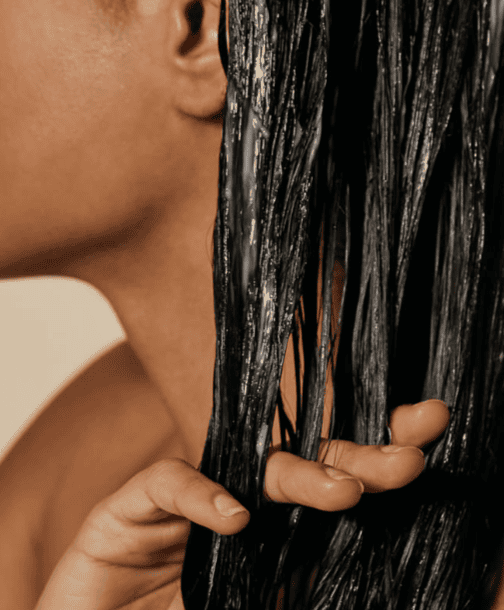
Start with clean, damp hair. Gently squeeze out excess water with a microfibre towel first.
Use a small amount. A few sprays, or a small amount of cream, depending on your hair’s length and thickness.
Apply to the mid-lengths and ends, keeping it away from the roots.
Work it through with your fingers or a wide-tooth comb, so it’s evenly spread.
Then style as usual. Apply heat protection next if you use heat, followed by your styling products.
For curly and coily hair
Leave-in conditioner is often the foundation of a curly hair routine.
Many people with curly or coily hair layer products to lock in moisture, using a method sometimes called LOC: a liquid or leave-in conditioner first, then an oil, then a cream to seal. Some prefer the order leave-in, cream, then oil. It’s worth trying both to see which your hair prefers.
Between washes, a little water mixed with leave-in conditioner is also a simple way to refresh curls and bring back their shape.
Common mistakes
Using too much, which can leave hair heavy or sticky.
Applying it to the roots, which can make hair look flat or greasy.
Assuming it protects against heat when the label doesn’t say it does.
Using a heavy cream on fine hair. A spray will usually suit it much better.
If your hair starts to feel coated or heavy over time, a clarifying shampoo every few weeks will reset it.
The short version:
A leave-in conditioner is a lightweight conditioner that stays in. It detangles, adds moisture and helps control frizz.
Ask yourself:
Does my hair tangle easily, feel dry by the end of the day, or frizz in damp weather? A leave-in could help.
Worth knowing:
Only rely on a leave-in for heat protection if the label specifically says it protects against heat.