You smell a perfume on a friend and fall for it straight away. It’s soft and warm, and it seems to follow her around the room. So you buy the same bottle, spray it on at home, and something is missing. It’s still lovely, but on you, the perfume smells different.
If this has happened to you, there’s nothing wrong with you or the bottle. A fragrance changes from one person to the next for a handful of reasons, and once you understand them, it becomes much easier to choose one that works on you.
Why perfume smells different on your skin
Your skin is where a fragrance develops, so it has the biggest say in how it smells.
Dry skin tends to let fragrance evaporate more quickly. The top notes disappear fast, and the scent can feel lighter and shorter-lived than you expected. Oilier skin, on the other hand, gives the fragrance something to hold on to, so it often lasts longer and can smell a little richer.
Your skin also changes through the year. If it’s drier in winter, or you’ve just stepped out of a hot shower, it will affect how the fragrance sits.
A simple way to help is to moisturise before you spray, using an unscented body lotion. Hydrated skin holds on to fragrance for longer, and the scent develops more evenly.
Why perfume smells different in summer
Warmth plays a big part too. Heat speeds up evaporation, so on a hot day a fragrance opens up quickly and travels further, while the lighter notes fade sooner. In the cold, the same perfume can feel quieter and stay closer to your skin.
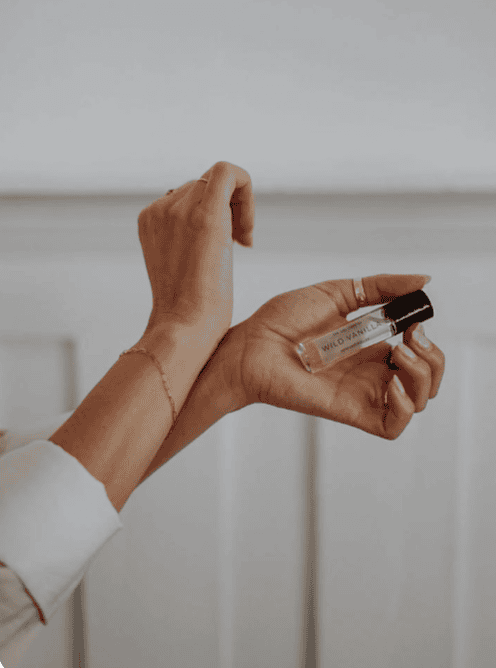
Your own body heat works in a similar way. Some people naturally run warmer than others, which is one reason a fragrance can seem stronger on a friend. It’s also why perfume is traditionally applied to pulse points like your wrists and neck, where the warmth helps the scent to lift.
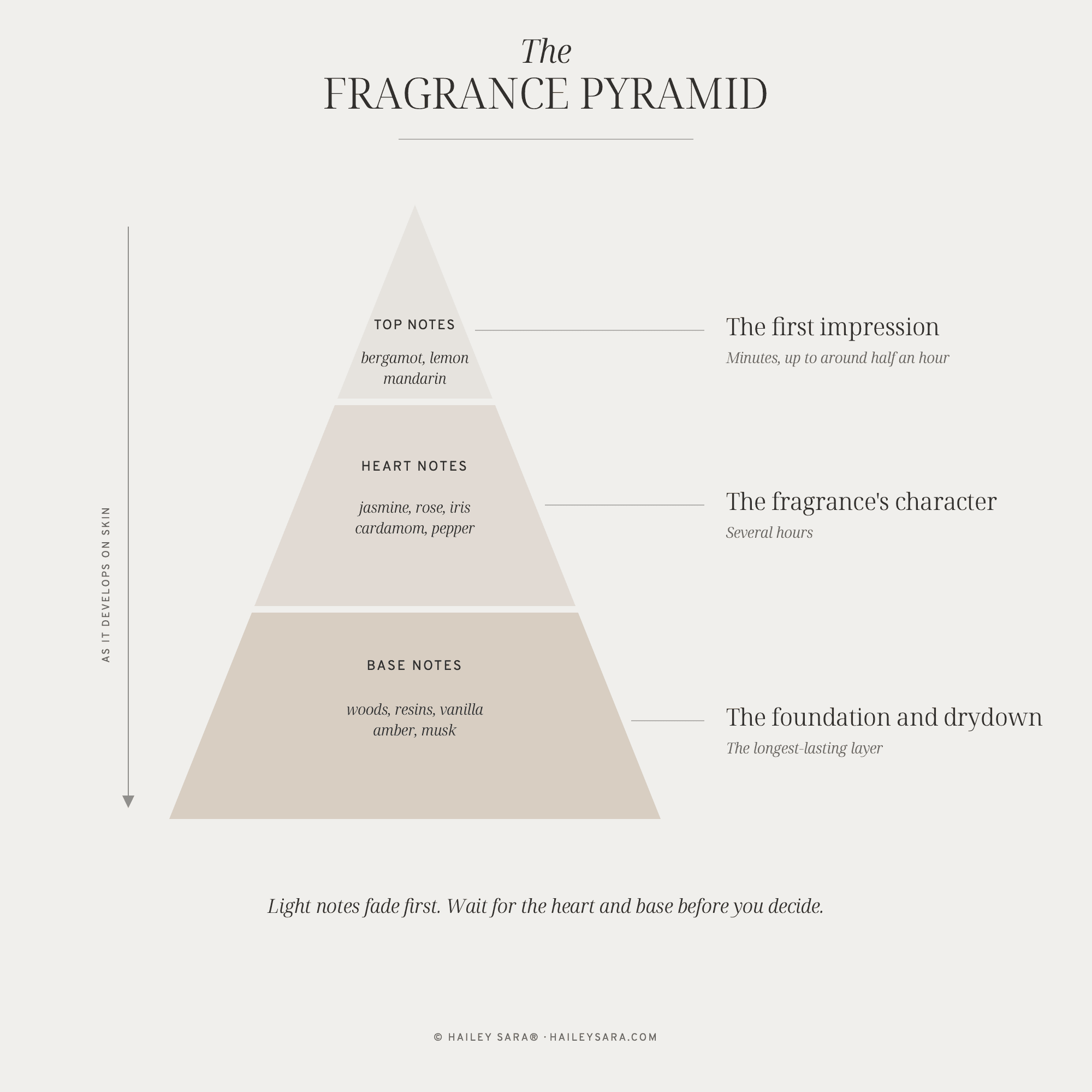
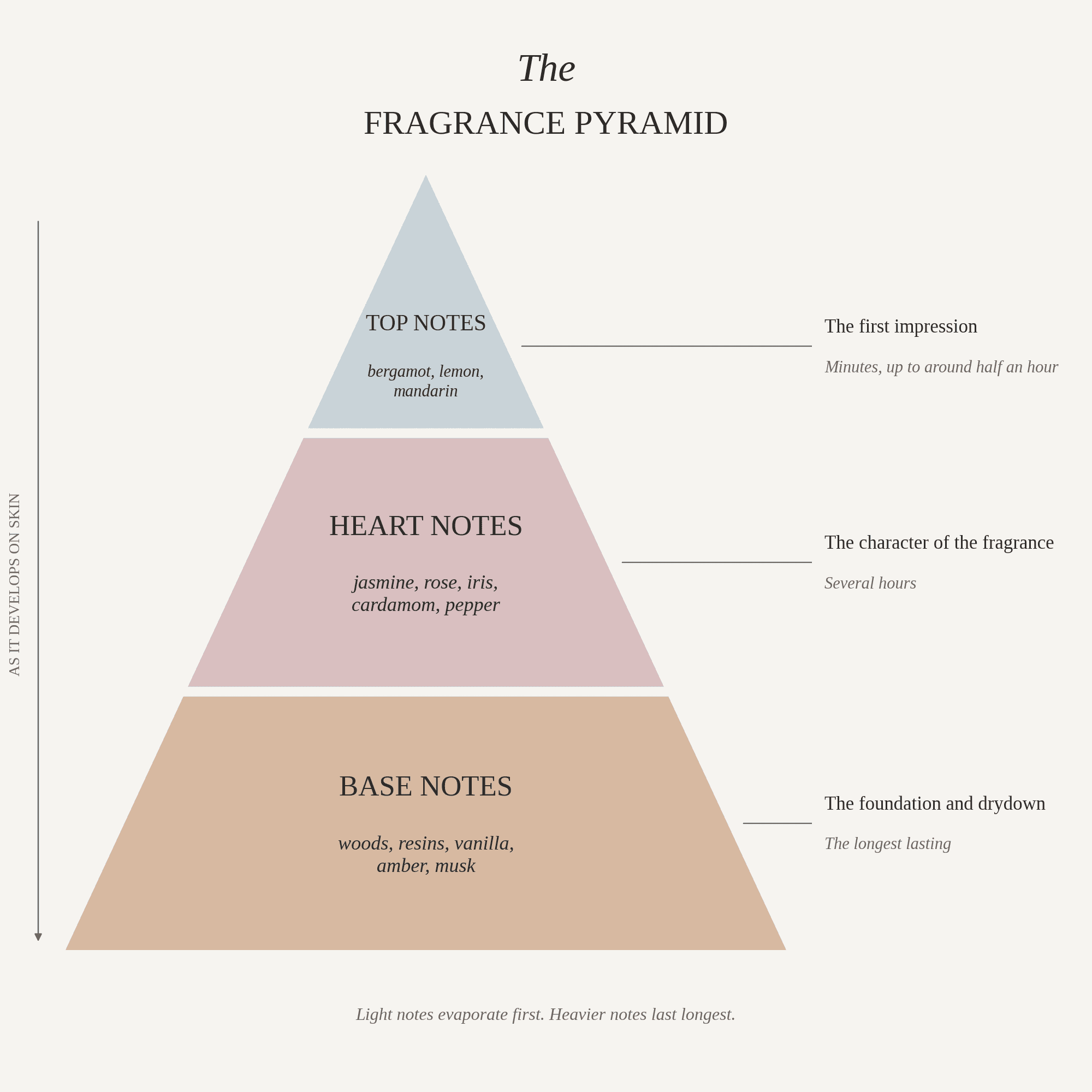
As I explained in the fragrance pyramid, the lighter top notes evaporate first. Warmth moves a fragrance along to its heart and base more quickly, so a scent you love in winter might feel heavy in July. Many people keep a lighter fragrance for the summer months for exactly this reason.
Your nose plays a part too
Sometimes the perfume hasn’t changed at all, and you’re simply smelling it differently.
Your nose gets used to a scent very quickly. After a while, your brain starts to filter it out, so you notice it less, even though the people around you can still smell it. This is often called nose blindness, and it explains why a perfume can seem to fade on you while a friend compliments it hours later.
It’s worth remembering before you reach for another spray. If you can’t smell your perfume after lunch, it’s usually still there.
Why perfume smells different to other people
Beyond this, we don’t all smell the same things. Your genes shape the smell receptors in your nose, and small differences between people can change how certain ingredients come across.
One well-known study, published in Nature, found that a variation in a single smell receptor changed how people experienced a scent called androstenone. Some found it sweet and pleasant, others found it unpleasant, and some could barely smell it at all.
In perfume, musks are the most common example. Some people can’t smell certain musks, or only pick them up faintly. Musks often sit in the base of a fragrance, so if a musky perfume smells beautiful on your friend but seems to disappear on you, you may simply be missing part of it.
Everything else you’re wearing
Your perfume rarely sits on bare skin on its own. Shower gel, body lotion, hair products and even your washing powder all carry their own scent, and they mix with whatever you spray.
Fabric makes a difference as well. Perfume usually lasts longer on clothes than on skin, and a scarf or jumper can hold on to it for days. However, it can smell a little flatter, because fabric doesn’t have the warmth of your skin to help it develop. Some fragrances can also mark delicate fabrics, so try a small hidden spot first.
When you’re trying a new perfume, wear it with unscented products if you can, so you’re smelling the fragrance on its own.
What about skin pH and diet?
You’ll often read that your skin’s pH, or what you eat, changes how a perfume smells. It’s a popular idea, and it makes sense that your body would play some part. However, there’s very little evidence that either one has a noticeable effect on how a fragrance smells on you.
Your skin type, the temperature and your own nose play a much bigger role. I find that reassuring, because these are all things you can understand and work with.
Getting the best from a perfume on your skin
Once you know what’s going on, a few small habits make a real difference.
- Moisturise with an unscented lotion before you spray.
- Apply to warm spots, like your wrists, neck and inner elbows.
- Try a perfume on your own skin before you buy it, rather than relying on a card or on how it smells on a friend.
- Wear it for a full day, so you know how it behaves on you.
- Hold back from spraying more when you stop noticing it.
If you’d like more help with this, my guide to how to test perfume properly takes you through it step by step.
The perfume you loved on your friend might still be the one for you. Give it time on your own skin, and you’ll soon know whether it’s a match. Next, I’ll share how to make your perfume last longer, from where to spray it to how to store the bottle.
The short edit
The essentials:
Perfume smells different on everyone because of your skin, the temperature and the way each of us smells. Always judge a fragrance on your own skin.
Ask yourself:
Do I love this perfume on me, or on someone else?
Worth knowing:
If you can’t smell your perfume after a few hours, it’s usually still there. Your nose has simply got used to it.