Melbourne-born and London-based, I'm a beauty and fashion educator with over a decade in the industry. This is where I share what I've learned: skincare that makes sense, style that fits a petite frame, and the everyday rituals worth keeping.
I have always loved fragrance. For a very long time, though, I couldn’t explain what I loved about it, or why.
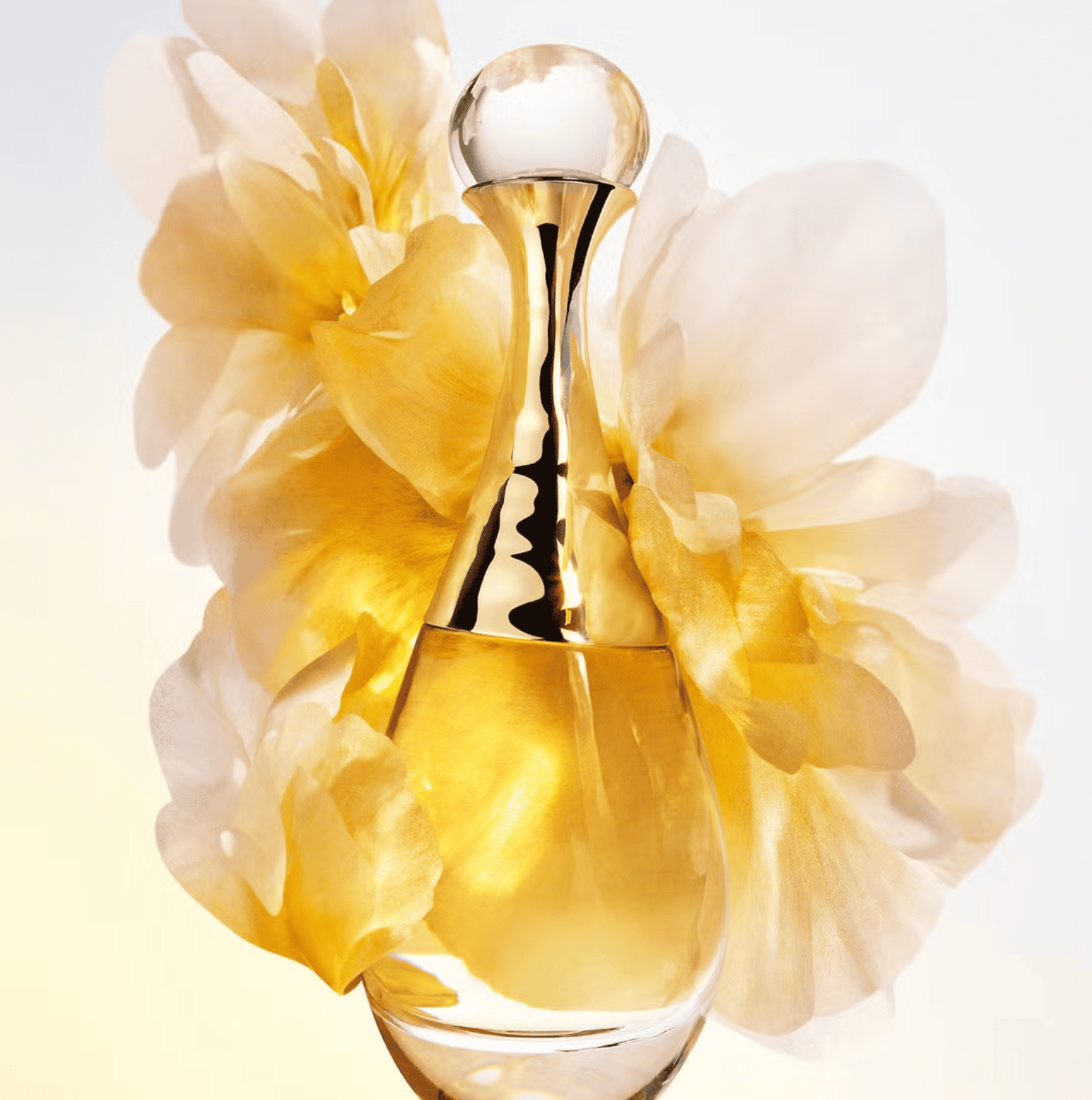
My earliest memory of perfume is my mum’s favourite, J’adore by Dior. The elegant gold bottle sat on her dressing table, and she only wore it on special occasions. Even as a child, I understood it was something precious. I couldn’t have told you it was a floral. I had no idea it opened bright and fruity before softening into something warmer. All I knew was that it was hers, it smelled beautiful, and I loved it.
Years later, I realised the name had been telling me all along. J’adore means “I love” in French, and love is exactly where Dior’s story with fragrance began.
In 1947, Christian Dior launched his house with his very first collection. He gave his perfumer, Paul Vacher, one instruction: “Make me a perfume that smells of love.” That perfume became Miss Dior. On the day of the show, it filled his salons, so the room itself smelled like the collection.
Dior asked for a feeling, and he trusted a perfumer to build it.
“The finishing touch of a dress”
Christian Dior
Learning the language of scent
Most of us start where I did as a child. We know what we like the moment we smell it. What we can’t do is find it again, or describe it to the person behind the counter.
Beauty gave me my first real language for it. Studying aromatherapy taught me the basics. I learnt about base notes, carrier oils, and how ingredients behave on skin.
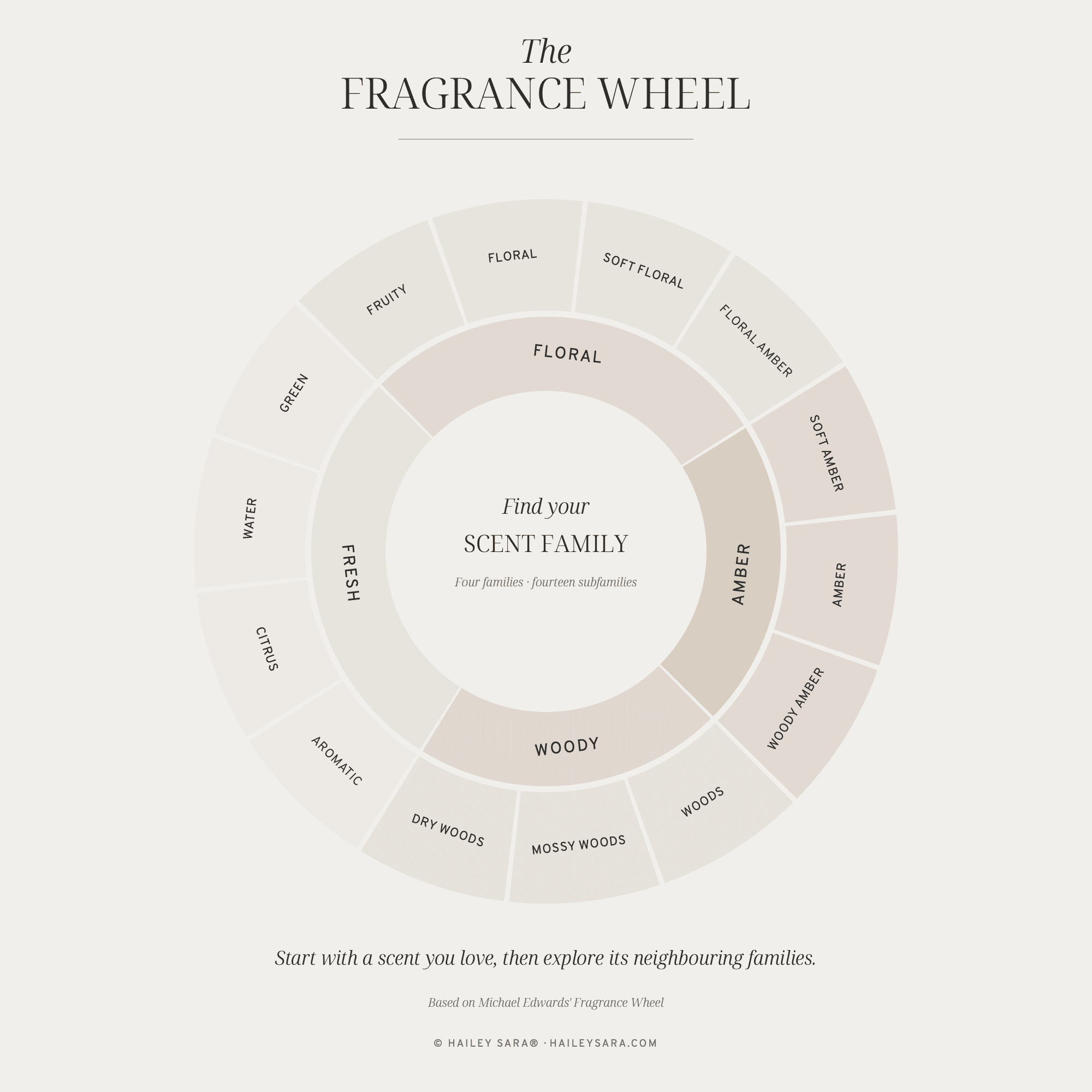
Later, I moved into fragrance training at Mecca and Sephora, working with houses like Byredo, Le Labo and Diptyque. There, I learnt the fragrance families and the concentrations. I also learnt how a scent changes over the hours you wear it.
The fragrance that changed everything
But the fragrance that changed how I thought about all of it was Maison Margiela’s Replica By the Fireplace.
Margiela builds every Replica around a specific memory: a place, a moment, a feeling, translated into scent. This one takes you to a chalet in Chamonix in 1971. There’s a log fire, chestnuts roasting, and snow falling outside. It’s warm, woody and a little sweet, with chestnut and clove. It was somebody else’s memory, and it still took me there.
That was when I understood what Dior had understood in 1947. You can build a fragrance to make someone feel something. The best ones tell you a story before you know a single note.
The finishing touch
This is the part most people don’t realise. Fragrance can take you somewhere you’ve never been, or back to somewhere you have. One spray can bring back a person, or a whole season of your life, before you’ve had time to think.
It’s also one of the most personal things we buy, and one of the hardest to buy well. The language is unfamiliar and the counters can be overwhelming. So many of us end up choosing by the bottle, the advert, or whatever a friend wears. I know, because for a long time that was me, looking at a gold bottle with no idea why I loved it.
Dior called perfume “the finishing touch of a dress,” and I’ve always thought of it that way. It’s the last thing you put on before you walk out the door. That’s why fragrance belongs here, alongside makeup, skincare and fashion.
In this part of The Edit, I’ll explain how fragrance works. We’ll look at why the same scent smells different on each of us, and how to test properly. Then we’ll cover making it last and building a collection that suits you. It’s the expert knowledge, in plain language, so you can walk up to that counter knowing what you’re looking for.
A simple guide to proportion, fit and the small styling shifts that make getting dressed easier when you’re petite.
BEST of THE EDIT
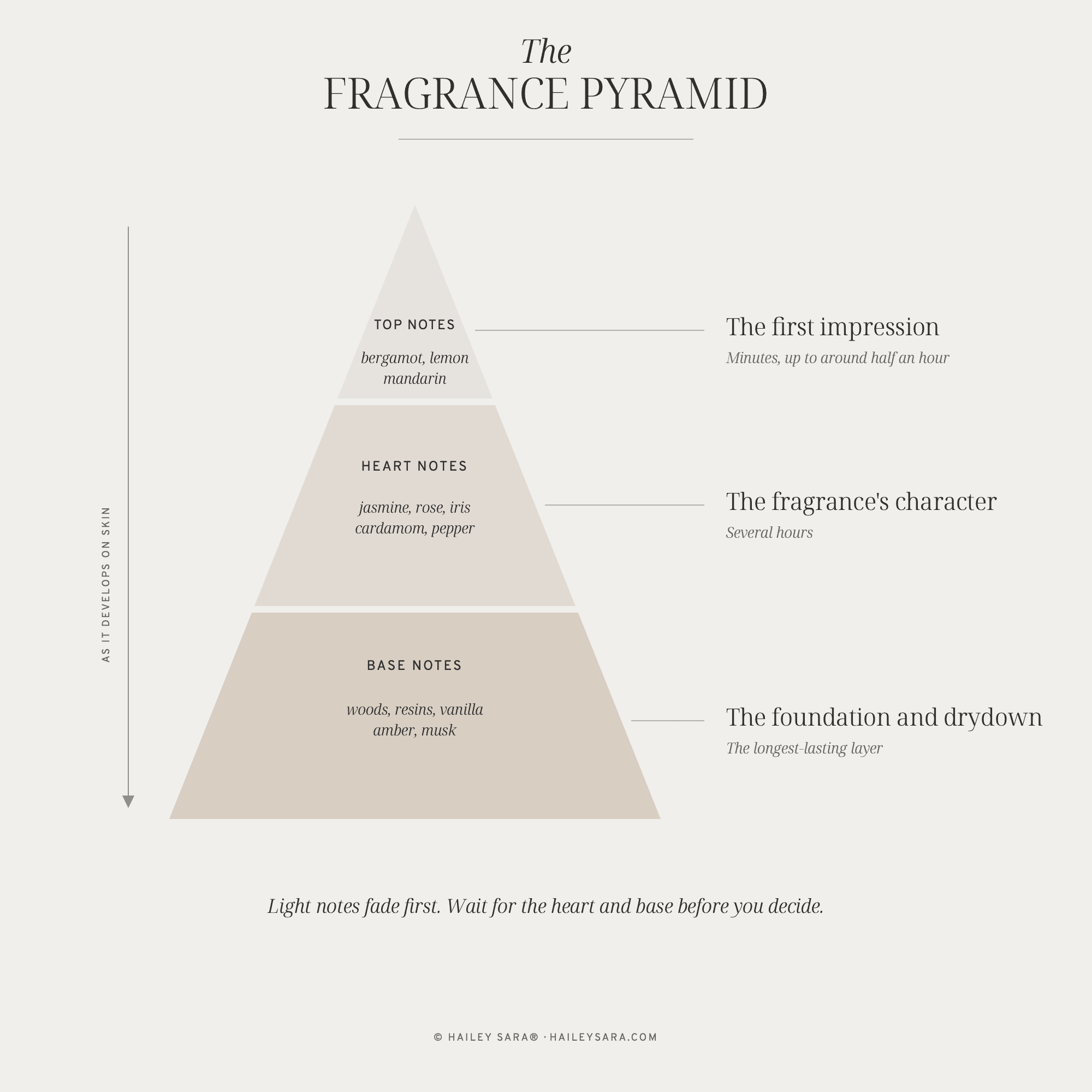
The Fragrance Pyramid: Top, Heart and Base Notes Explained
A fragrance changes from the first spray to the drydown. Here’s how top, heart and base notes work, and why it’s worth giving a scent time before you decide.