Mascara is one of the most personal products in makeup.
Most people have one they swear by, and once they’ve found it, they rarely stray. But finding it can take years of trial and error, because mascara isn’t just mascara. The brush, the formula and even the colour all make a difference, and the right combination depends entirely on the lashes you have.
Start with your lashes
To find the right mascara, you first need to understand your own lashes. We all have different lashes, and the mascara that works beautifully for one person can do very little for another.
There are three things to consider:
- Length, how long your lashes are naturally.
- Density, how many lashes you have, and how full they look.
- Thickness, whether each individual lash is fine or thick.
Then there’s the look you want: longer, fuller, more lifted, more defined, or simply a little more noticeable.
Fine lashes often need something lighter and more lengthening. A heavy, volumising formula can weigh them down and make them clump.
Thick, dense lashes often need something more volumising, and a brush that can get through them properly.
The brush
The brush matters as much as the formula, and your lashes decide which brush you need.
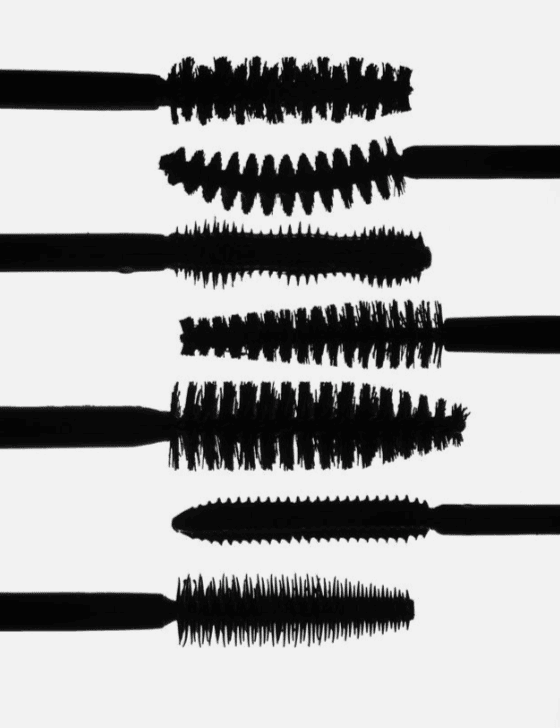
- Thick, dense lashes need a thicker, denser brush. It can reach through the lashes and coat them from root to tip, and it holds more product, which fuller lashes can carry without being weighed down.
- Fine lashes often do better with a thinner brush, with finer, closer bristles. It applies less product, more evenly, so lashes are coated without clumping or drooping.
- There are also two main brush materials:
- Traditional bristle brushes, usually made from fine nylon fibres, hold more product. They’re ideal for volume.
- Silicone or rubber brushes are moulded, with more widely spaced, flexible bristles. They apply product precisely, separate lashes well and suit fine or short lashes, and anyone who wants definition rather than drama.
The shape changes the effect too. A curved brush helps lift and curl. A straight brush gives even coverage. A small or slim brush reaches the inner corners and lower lashes. And a comb-style brush separates lashes for a defined, fluttery look.
Formula
Regular mascara is the most common. It’s easy to apply and easy to remove, and it suits everyday wear. But it can smudge or break down with oil, sweat or tears.
Waterproof mascara resists water, sweat and tears, which makes it ideal for events, weddings, holidays, workouts and watery eyes. It also holds a curl particularly well, so it’s often a good choice for straight lashes that don’t hold their curl. The trade-off is that it’s harder to remove, and more drying for lashes if worn every day.
Water-resistant mascara sits in between: more resistant than regular mascara, but easier to remove than waterproof.
Tubing mascara works differently. Rather than painting the lashes, it wraps each one in tiny tubes. Those tubes resist smudging from oil, which makes tubing mascara ideal if your makeup or skin tends to break mascara down. It’s also gentle on sensitive lashes, as it slides off with warm water, without rubbing. But it isn’t waterproof, so it may not suit watery eyes.
Fibre mascaras contain tiny fibres that cling to the lashes to add length. They can be very effective, but the fibres can flake, so they’re not always ideal for sensitive eyes or contact lens wearers.
Clear mascara adds definition and a little lift, without colour. It’s lovely for a very natural look, and for grooming brows.
Colour
- Black is the most common, and the most defining.
- Brown, or brown-black, gives a softer, more natural look. It’s especially flattering on fair lashes and lighter colouring.
- Burgundy or plum brings out green eyes beautifully, because red-violet tones sit opposite green on the colour wheel.
- Navy can make the whites of the eyes look brighter, and it’s a lovely, subtle alternative to black.
Mascara primers
Some mascaras come with a lash primer, often at the other end of the same tube. It’s usually a white or clear formula that coats the lashes before mascara, adding thickness and length, and helping mascara last.
It’s a lovely extra step for fine or sparse lashes, and for anyone who wants a little more volume without switching to a heavier mascara.
Why mascara smudges
Finding a mascara that doesn’t flake, smudge or transfer is one of the hardest parts. And often, the problem isn’t the mascara at all.
I remember one client who’d tried almost every mascara on the market. Every one of them smudged under her eyes by the afternoon. She was convinced she simply hadn’t found the right one yet.
But when we looked at her whole routine, the answer was in her concealer. She was using an oil-based concealer, and her lashes were long enough to touch her lower lid when she looked down, and her upper lid when she looked up. Every time they touched her concealer, the oil broke her mascara down. That’s simply what oil does.
We moved her to a tubing mascara, which isn’t broken down by oil. And she never had a smudged under-eye again.
But the answer isn’t always tubing. Another client had naturally watery eyes, and for her, tubing mascara was the worst choice, because it softens with warm water. She needed a waterproof formula.
It’s the same lesson as with foundation: the right product depends on the whole picture, not just the product itself.
How to remove it
The wrong removal method can make mascara extremely difficult to take off, leave residue in your eyes, and even cause lash loss, from all the extra rubbing.
- Regular mascara removes easily with most gentle eye makeup removers and cleansers.
- Waterproof mascara needs an oil-based or bi-phase remover, one that separates into two layers. Water-based cleansers can’t break it down, so trying to remove it with one becomes an impossible task.
- Tubing mascara is designed to come off with warm water and gentle pressure. Hold a warm, damp cloth or cotton pad against the lashes for a few seconds, then slide the tubes off. There’s no need to rub.
Whatever you use, be gentle. Press and hold rather than scrubbing, and let the remover do the work.
Keeping it realistic
Mascara enhances the lashes you have. It can make them look longer, fuller and more defined. But it can’t create lashes that aren’t there.
That’s not a flaw. It’s just worth knowing, so you choose a mascara based on what it can realistically do for your lashes, rather than chasing a result from an advert that no mascara could deliver.
A lash curler, used before mascara, can make a surprising difference, especially for straight lashes.
Mascara and your eyes
Mascara has a much shorter life than most people realise. Many of us use it until it’s dry and clumpy, but once opened, most mascaras should be replaced after about three months.
Check the packaging for a small open-jar symbol with a number, such as 3M. That’s how many months the product is designed to last once opened.
The eyes are sensitive, and an old or contaminated mascara can cause irritation or infection. A few things help:
- Close the tube as quickly as possible, to keep air out.
- Don’t pump the wand in and out. It pushes air into the tube, which dries the formula and can introduce bacteria.
- Never share mascara.
- Replace it after an eye infection.
- Don’t add water to a dried-out mascara to revive it. Replace it instead.
Putting it together
When you’re choosing a mascara, it helps to work through a few questions:
What kind of lashes do I have? What look do I want, and is it realistic for my lashes? Which brush will help me get there? Which formula suits my day, my events and my lifestyle? How will it interact with the rest of my eye and complexion products? And how will I remove it?
It’s more to think about than most people expect. But once you’ve answered those questions, you’ll understand why the mascara everyone raves about might not be the one for you, and exactly what to look for instead.
Find your match
For fine lashes
A lightweight, lengthening formula with a slim or silicone brush, to coat evenly without weighing lashes down.
For thick, dense lashes
A volumising formula with a fuller bristle brush, to reach through the lashes and build volume.
For straight lashes that won’t hold a curl
A waterproof formula with a curved brush, used after a lash curler.
For smudging or oily lids
A tubing mascara, which resists oil and won’t be broken down by oil-based concealers or eye creams.
For watery eyes
A waterproof formula, which won’t soften with tears.
For sensitive eyes
A tubing mascara that removes with warm water, and avoid fibre formulas.
The short edit
The essentials:
Choose a mascara for your lashes first: the brush for their thickness and density, and the formula for your lifestyle and the rest of your makeup.
Ask yourself:
If my mascara smudges, is it the mascara, or is it my concealer or eye cream breaking it down?
Worth knowing:
Most mascaras should be replaced about three months after opening. Look for the open-jar symbol on the packaging.