You’ve found a fragrance you love. Then you notice it comes in two bottles, an eau de parfum and an eau de toilette, at two different prices. Which one do you buy?
It’s one of the most common questions people ask when buying fragrance, and the honest answer is that it depends. The label tells you something about concentration. However, it leaves a lot out, and knowing the rest can help you choose the version that suits you best.
What’s in an eau de parfum or eau de toilette?
Every fragrance is a blend of perfume oil, alcohol and sometimes a little water. The perfume oil is the fragrance itself, holding every note in the pyramid, from the bright opening to the warm drydown. The alcohol carries it. It helps the scent lift and spread as you spray, and then it evaporates, leaving the fragrance on your skin.
Concentration is simply how much of that perfume oil the bottle contains. In general, the more oil, the richer and deeper the scent feels, and the longer it stays with you. That’s also why the more concentrated versions tend to cost more.
From a light mist to a rich parfum
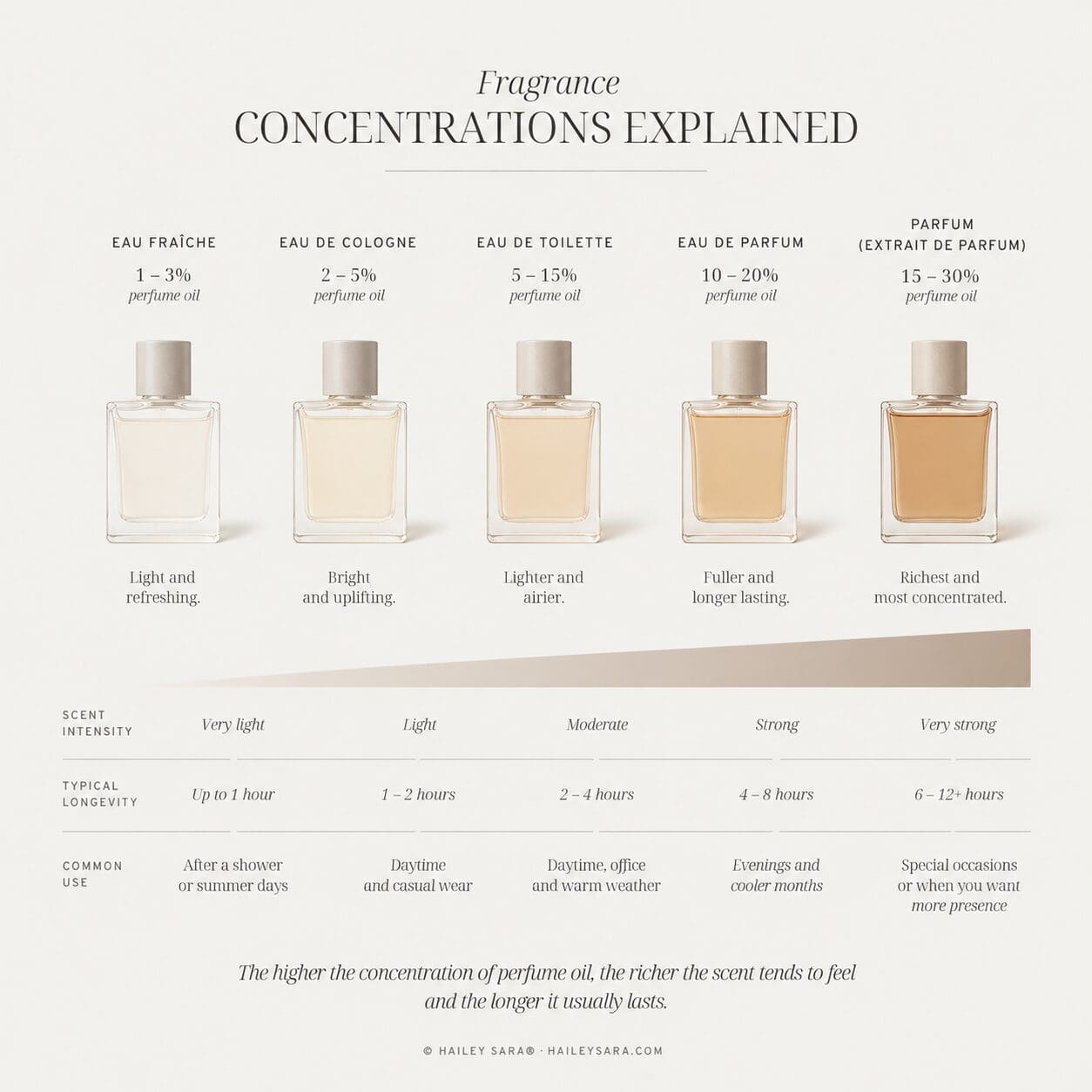
The ranges below are a useful guide, although they aren’t fixed rules.
Eau fraîche and body mist contain around 1 to 3% perfume oil. They feel light and refreshing, the kind of thing you spray generously after a shower or keep in your bag on a summer’s day.
At around 2 to 5%, eau de cologne is traditionally fresh and citrusy. It’s bright and uplifting, but it usually fades within a couple of hours.
Eau de toilette sits at around 5 to 15%. It tends to feel lighter and airier on the skin, which makes it easy to wear in the day and in warmer weather. Many of Maison Margiela’s Replica fragrances, including Jazz Club and Lazy Sunday Morning, are eaux de toilette.
Next comes eau de parfum, at around 10 to 20%. It’s the most common concentration today, and it usually feels fuller and lasts longer. Kayali Vanilla 28, for example, is an eau de parfum, which suits its warm, cosy character.
Finally, parfum, or extrait de parfum, contains around 15 to 30%. It’s the richest and most concentrated version, and usually the most expensive. You’ll often need only a spray or two.
Eau de parfum vs eau de toilette: is one just stronger?
It’s tempting to assume the eau de toilette is simply a lighter version of the eau de parfum. Sometimes that’s true. Often, though, perfumers rebalance the formula for each concentration, adjusting the notes so each version works at its own strength. As a result, the two can smell noticeably different.
YSL Libre is a good example. The eau de parfum pairs lavender and orange blossom with vanilla. Le Parfum, the most intense version, adds a warm saffron accord, which makes it feel richer and spicier. Similarly, the extrait of Maison Francis Kurkdjian’s Baccarat Rouge 540 brings in bitter almond, a note you won’t find in the eau de parfum.
So if you fall for one version, it’s worth smelling the other before you decide. You might even prefer it.
What the label leaves out
Surprisingly, no law defines these terms. Neither the EU nor the US sets a required percentage for an eau de parfum or an eau de toilette. The ranges are industry conventions, and they overlap. As a result, one brand’s eau de toilette can be as concentrated as another brand’s eau de parfum.
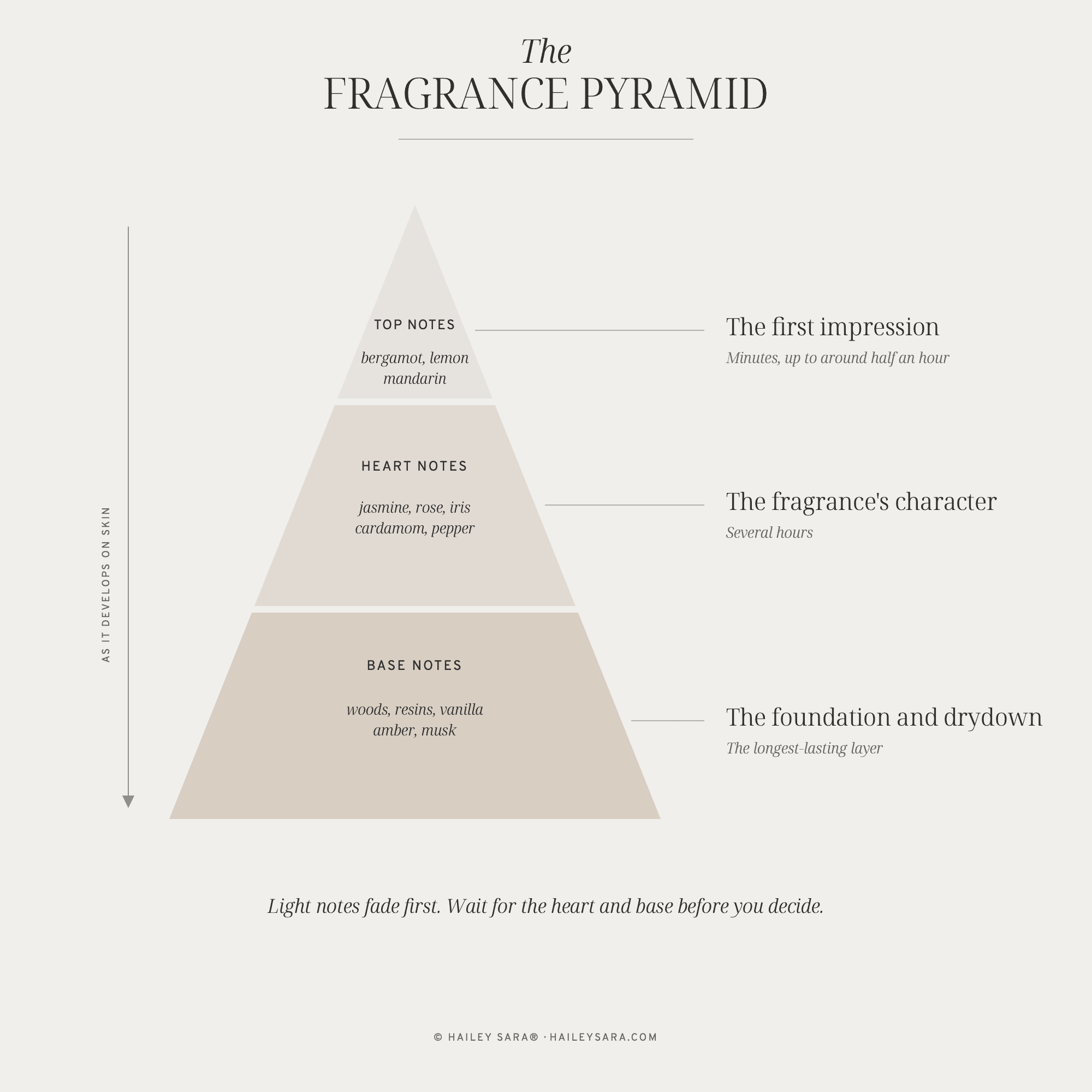
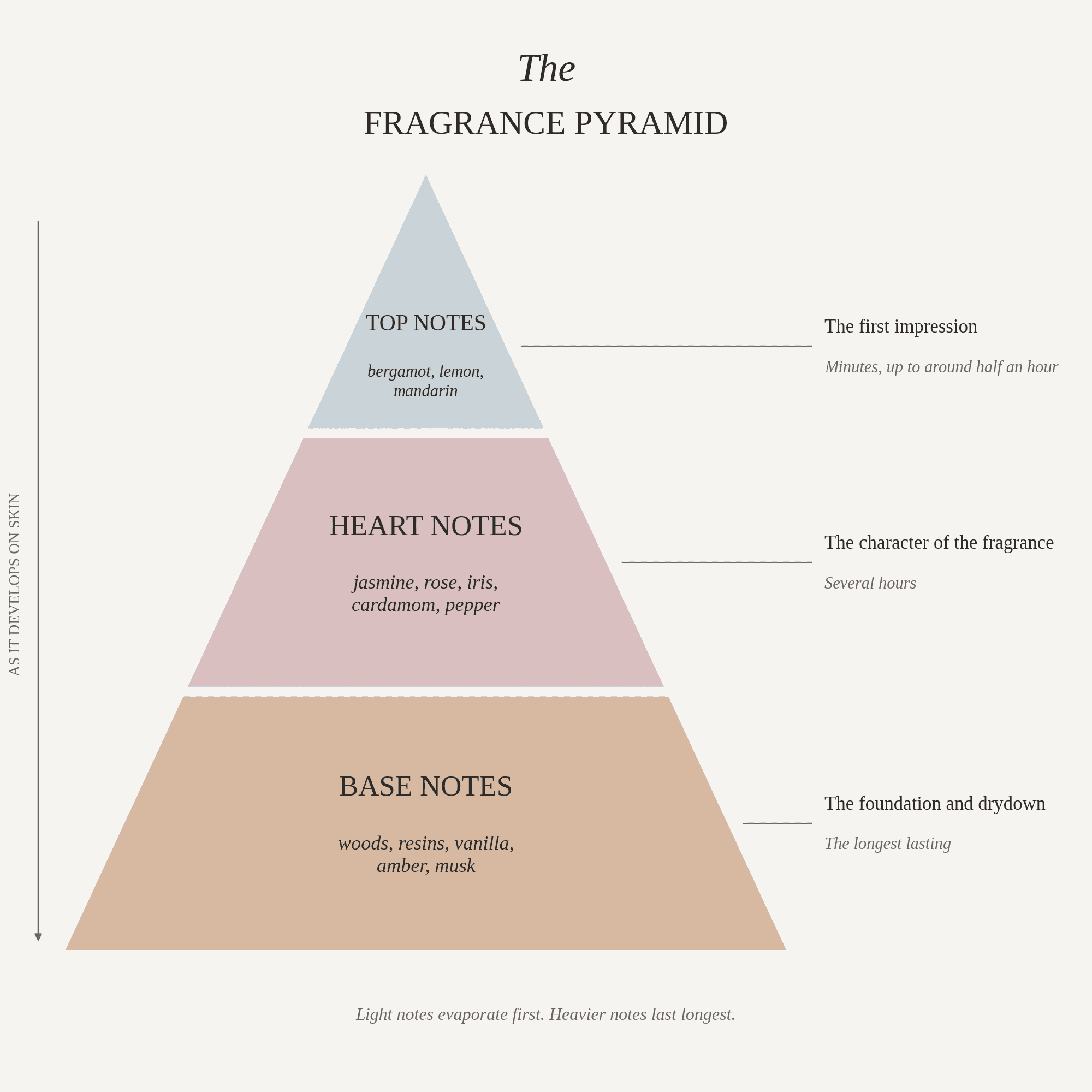
Concentration also isn’t the only thing that decides how long a fragrance lasts. The ingredients matter just as much. As I explained in the fragrance pyramid, light citrus notes evaporate quickly, while woods, resins and vanilla linger for hours. So a fresh, citrusy eau de parfum can fade faster than a warm, woody eau de toilette. It’s one reason two fragrances with the same label can behave so differently on your skin.
Close to the skin, or across the room
How far a scent travels from your skin is known as sillage, or projection. Think of it as the trail a fragrance leaves as you walk past. It depends on the ingredients as well as the concentration, so a stronger version won’t necessarily fill a room. Some parfums even feel softer and more intimate than the eau de parfum of the same fragrance, noticeable only when someone leans in close.
So if you want a scent people notice as you pass, the most concentrated version isn’t automatically the answer.
Beyond the bottle
Fragrance doesn’t only come as a spray, and some of the other formats are lovely ways to wear a scent you already own.
Hair mists are often gentler formulas made for hair. Hair holds scent well, so a mist can leave a soft trail as you move.
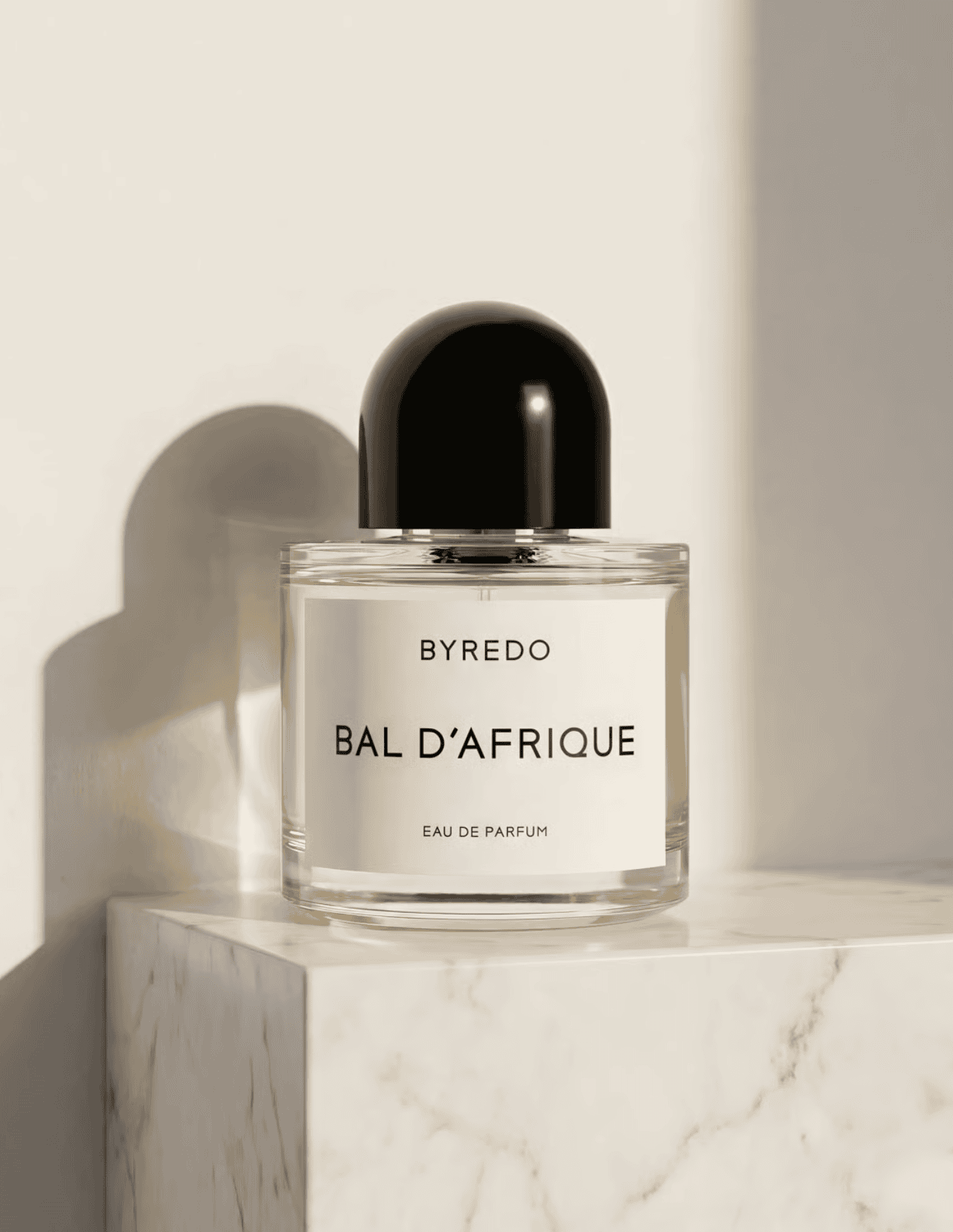
Perfume oils contain no alcohol and sit close to the skin, which gives them a more personal feel. Byredo, for example, makes Gypsy Water as a roll-on perfumed oil as well as an eau de parfum.
Body mists and lotions are lighter still. They work well layered under your fragrance, and they can help it last a little longer.
Choosing between eau de parfum and eau de toilette
- Think about when and where you’ll wear it. An eau de toilette suits daytime, the office and warm weather, when you want something fresh and easy. An eau de parfum or parfum suits evenings, cooler months and moments when you want your fragrance to feel a little more special.
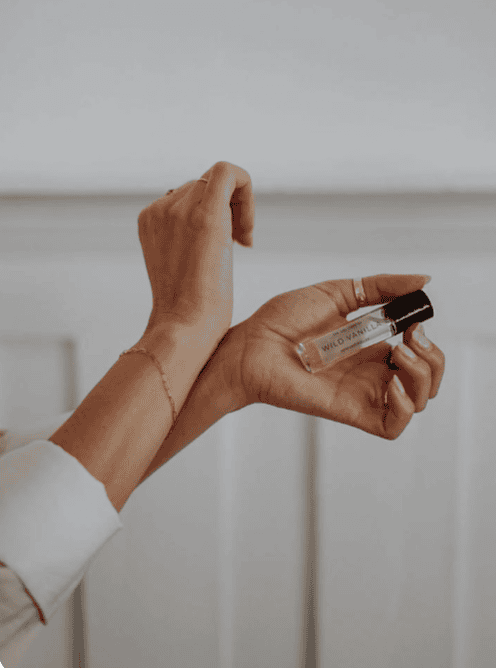
- Compare versions side by side. Spray one on each wrist, then notice how each one changes over a few hours. The difference is often clearest in the drydown.
- Consider cost per wear. A parfum costs more, but you’ll often need fewer sprays, so a bottle can last longer than you’d expect.
- Look beyond the label. Check the notes, and remember that one brand’s eau de toilette can outlast another brand’s eau de parfum.
The best version is the one you enjoy wearing, at the moments you’ll actually wear it. Next, I’ll explain how to test a fragrance properly, from the first spray in store to wearing it for a full day.
The short edit
The essentials:
Concentration is how much perfume oil a fragrance contains. Generally, an eau de parfum lasts longer than an eau de toilette, but the ingredients matter just as much.
Ask yourself:
Do I love this fragrance, or this particular version of it? Try both concentrations before you decide.
Worth knowing:
No law defines terms like eau de parfum, and different concentrations of the same fragrance can smell noticeably different.