Bronzer and contour are two of the most confused products in makeup.
They often sit side by side in the same palette. They’re both deeper than your skin tone. And they’re both brushed onto similar parts of the face. So it’s no surprise that many people use them interchangeably, or assume they’re simply two names for the same thing.
They’re not. They do opposite jobs, and once you understand the difference, it changes how you choose them, and how you use them.
The difference
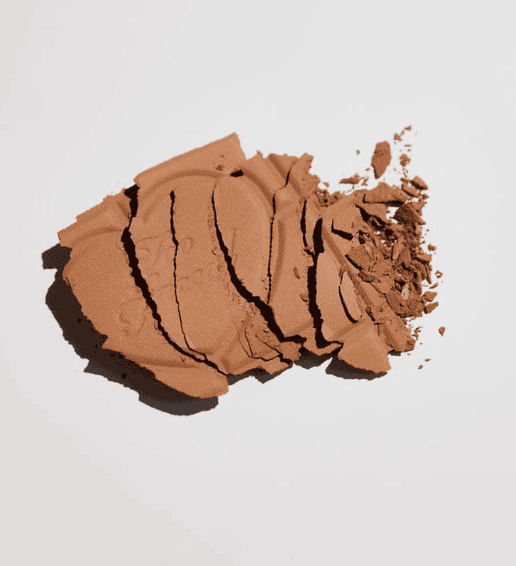
Bronzer adds warmth. It recreates the glow your skin has after time in the sun. It’s warm-toned, and it goes where the sun naturally hits your face.
Contour creates shadow. It adds definition and structure by mimicking the natural shadows of your face. It’s cooler-toned, and it goes where shadows naturally fall.
One brings colour and life. The other brings shape.
Why the colour matters
This is where most of the confusion comes from.
Shadows in nature are cool. They have a slightly grey or taupe tone. So a contour needs to be cool or neutral, and always matte, to look like a real shadow.
Sun-warmed skin is warm. So a bronzer needs a warm, golden or reddish undertone to look like a real glow.
When they’re swapped, it shows. A warm bronzer used as contour tends to look muddy or orange, because shadows are never that colour. And a cool contour used as bronzer can make skin look grey, flat or even dirty, because it’s taking warmth away rather than adding it.
Where each one goes
- Bronzer goes where the sun would naturally catch your face: the top of the forehead, the cheekbones, the bridge of the nose and the jawline. Many makeup artists sweep it in a soft “3” shape on each side of the face, from forehead to cheekbone to jaw.
- Contour goes where you want to create a shadow: in the hollows just beneath the cheekbones, along the jawline, down the sides of the nose, and around the hairline at the temples.
Bronzer should look diffused and soft. Contour can be a little more precise, but it should still be blended until there are no visible lines.
Do you need both?
Not necessarily.
For everyday makeup, most people only need a bronzer, to bring warmth back to the face after foundation.
Contour is useful if you want more definition and structure, for photos, special occasions, or simply because you enjoy a more sculpted look.
And if you’d like a little of both in one step, a soft, neutral bronzer, one that’s warm but not orange, can do a gentle version of each, especially on lighter skin.
If you do use both, the usual order is contour first, to create shape, then bronzer, to add warmth, then blush.
Formula
Like blush, bronzer and contour come in several formulas.
- Powder is the most common, and the easiest to control and build. It suits oily and combination skin, and goes on after powder.
- Cream melts into the skin for the most natural finish. It suits dry and mature skin, and goes on over foundation, before powder.
- Liquid is lightweight, blendable and often pigmented, so a little goes a long way.
- Stick formulas are cream in a convenient format, easy to draw on and blend, which makes them especially popular for contour.
The same rule applies as with blush: wet on wet, dry on dry. Creams and liquids before powder, powders after.
Finish
Contour should always be matte. Shimmer reflects light, which is the opposite of a shadow. A shimmery contour makes a hollow look lifted instead of sculpted.
Bronzer can be matte or have a soft sheen. A matte bronzer looks the most natural, especially on textured skin. A bronzer with a subtle glow adds radiance, lovely for a sun-kissed look, but it will highlight texture wherever it goes.
Choosing your shade
For bronzer, choose a shade around one to two shades deeper than your skin, with a warm undertone. If your undertone is cool, look for a softer, more neutral bronzer rather than a very orange or red one, which can look unnatural.
For contour, choose a shade around one to two shades deeper than your skin, with a cool or neutral undertone, and always matte.
Depth matters as much as undertone. On fair and light skin, both need to be soft and subtle, or they’ll look harsh. Deeper skin tones need deeper, richer shades to show at all. A bronzer that’s too light on deep skin can look ashy, while a contour that’s too light won’t create any shadow. Look for deep, rich bronzers and cocoa or espresso-toned contours.
Tools
- A large, fluffy brush is ideal for bronzer, for a soft, diffused finish.
- A smaller, denser or angled brush suits contour, for more precise placement.
- A damp sponge works beautifully for cream and liquid formulas, pressing them into the skin so they blend seamlessly.
- Fingers are useful for warming and blending cream formulas.
Getting it right
- Start with less. Both bronzer and contour are easier to build than to take away.
- Blend more than you think. Harsh lines are the quickest way to make either one look obvious.
- Check in natural light. Like blush, bronzer and contour can look very different in daylight than under bathroom lighting.
- Tap off excess powder before applying, especially with pigmented formulas.
- Once you understand that bronzer is about warmth and contour is about shadow, choosing the right shade, and placing it in the right spot, becomes much easier.
Find your match
Powder bronzer
Best for oily and combination skin, and for an easy, buildable glow. Apply after powder.
Cream bronzer
Best for dry and mature skin, and for the most natural, skin-like warmth. Apply before powder.
Powder contour
Best for oily skin, and for soft, buildable definition. Choose a cool or neutral matte shade.
Cream or stick contour
Best for dry skin, and for precise, blendable definition. Apply before powder.
Neutral bronzer
Best for a little warmth and a little definition in one step, especially on lighter skin.
The short edit
The essentials:
Bronzer adds warmth where the sun hits. Contour creates shadow where shadows fall. They’re different tones for different jobs.
Ask yourself:
Is my contour warm and orange-toned? If so, it’s probably a bronzer, and that’s why it looks muddy.
Worth knowing:
Contour should always be matte. Shimmer reflects light, which is the opposite of a shadow.